





For small and medium-sized businesses (SMBs) that operate pickup truck fleets in sectors such as construction, landscaping, delivery services, or field maintenance, ensuring compliance with gross vehicle weight rating (GVWR) standards, managing payload effectively, and adhering to towing safety protocols are essential to mitigate risks, enhance operational efficiency, and avoid regulatory penalties. Overloading vehicles or improper towing can lead to equipment damage, increased accident likelihood, and substantial fines.

This article provides detailed guidance on training drivers in proper loading techniques, understanding trailer brake requirements, using weight-distribution hitches, and strategies to prevent fines for overloaded trucks or improper towing practices, thereby supporting safe and compliant fleet operations.
Understanding GVWR, Payload, and Towing Capacities
The GVWR represents the maximum allowable weight of a fully loaded vehicle, including the curb weight, passengers, cargo, and any towed load, as specified by the manufacturer. For pickup trucks, compliance with GVWR is critical under U.S. Department of Transportation (DOT) regulations, particularly for vehicles with a GVWR of 10,001 pounds or more, which may trigger additional requirements such as periodic inspections and driver qualifications.
Payload capacity is the GVWR minus the vehicle's curb weight, dictating the safe limit for cargo and passengers. Towing capacity, meanwhile, encompasses the gross combined weight rating (GCWR), which includes the weight of the towed trailer. Exceeding these limits compromises vehicle stability, braking performance, and tire integrity, necessitating rigorous fleet management protocols.
Proper Loading Techniques and Driver Training
Effective driver training on loading techniques is fundamental to maintaining safety and compliance. Begin training sessions with an overview of the vehicle's specifications, emphasizing the importance of consulting the owner's manual or doorjamb sticker for GVWR and payload limits.
Instruct drivers to distribute weight evenly by placing heavier items near the cab or at the rear of the bed to maintain balance and prevent rear-end sag. Heavier boxes or equipment should be positioned at the bottom, with lighter items on top, and all cargo secured using ratchet straps, chains, or tie-downs to prevent shifting during transit.
Training should include hands-on demonstrations, such as using scales to verify payload before departure and adjusting loads to keep the material level with the truck bed when not properly tarped or netted. Simulate real-world scenarios, including loading on uneven terrain, and reinforce the use of tie-down points to secure protruding items in compliance with legal requirements. Regular refresher courses, perhaps quarterly, combined with audits of loading practices, ensure adherence and reduce the risk of overload-related incidents.
Trailer Brake Requirements
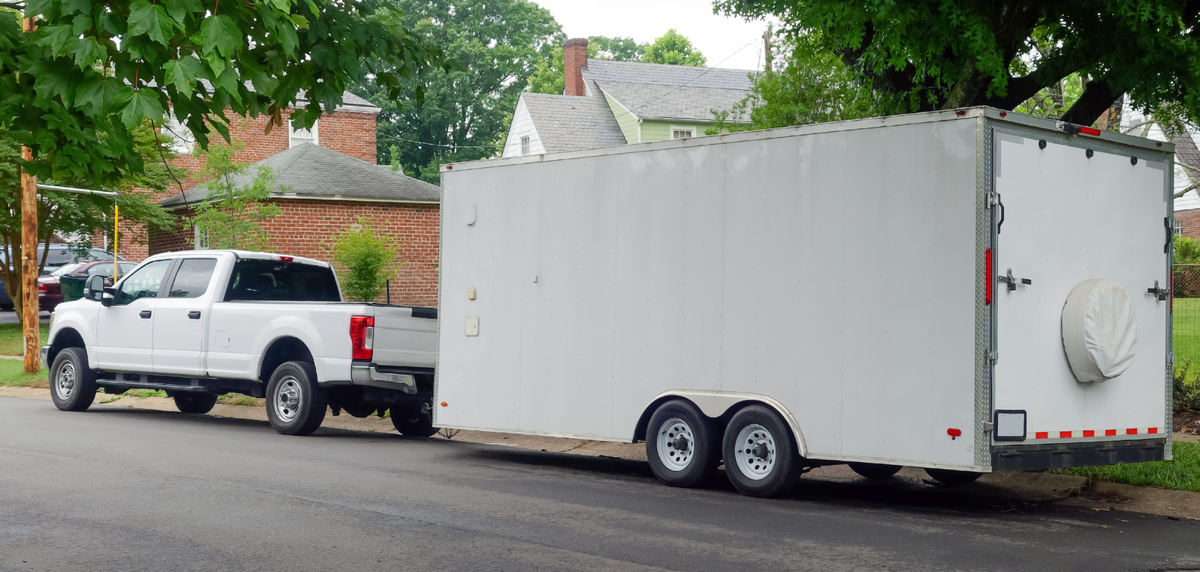
When towing trailers with pickup trucks, compliance with brake requirements is mandated by federal and state regulations to ensure adequate stopping power. In most U.S. states, trailers with a gross vehicle weight rating (GVWR) exceeding 3,000 pounds require brakes, often electric or hydraulic systems operable from the towing vehicle's cab.
For instance, some jurisdictions require brakes on trailers weighing 1,000 to 3,000 pounds, with variations: Delaware requires brakes for trailers over 4,000 pounds, while others, such as California, mandate them for loads over 1,500 pounds.
Driver training must cover the installation and testing of brake controllers to ensure compatibility between the truck and trailer systems. Emphasize the need for surge brakes on lighter trailers or electric-over-hydraulic setups for heavier loads, and instruct on adjusting gain settings to match trailer weight for responsive braking without lockup. Include protocols for pre-trip inspections, such as verifying brake light connections and emergency breakaway systems, to prevent violations during roadside checks.
Weight Distribution Hitches: Benefits and Usage
Weight distribution hitches (WDHs) are vital for safe towing, particularly when trailer tongue weight exceeds 50% of the towing vehicle's rear axle capacity. These devices redistribute weight from the rear axle to the front axle and trailer axles, improving steering, braking, and overall stability while reducing trailer sway. Benefits include enhanced control, even tire wear, and reduced strain on the vehicle's suspension, making them recommended for trailers weighing 50% or more of the tow vehicle's weight.
In training, demonstrate proper setup: attach the hitch head to the ball mount, connect the spring bars, and adjust the tension to restore approximately half of the lost front axle weight after hitching. Teach drivers to measure vehicle sag before and after adjustment by measuring at the wheel wells with a tape measure. Incorporate sway control features in WDHs for added safety, and stress the importance of matching the hitch's rating to the trailer's gross trailer weight (GTW) to avoid equipment failure.
Avoiding Fines from Overloaded Trucks or Improper Towing Practices
Non-compliance with GVWR or towing regulations can result in significant penalties, classified as misdemeanors in most states, with fines escalating based on the degree of overload. For example, overweight violations may incur fines ranging from hundreds to thousands of dollars per incident, potentially reaching $10,000 or more for severe cases involving accidents, alongside possible vehicle impoundment or criminal charges. Improper towing, such as the absence of required brakes or insecure loads, also attracts citations during Federal Motor Carrier Safety Administration (FMCSA) inspections.
To prevent these, implement fleet policies requiring weight verification on certified scales before trips and load documentation. Train drivers on state-specific laws, using resources like FMCSA guidelines, and enforce the use of payload calculators or apps. Conduct regular vehicle inspections and maintain records to demonstrate due diligence, reducing liability in enforcement scenarios.
Developing Comprehensive Driver Training Programs
A structured training program integrates these elements through classroom sessions, practical exercises, and certification. Use visual aids, such as videos on loading and hitching, and simulate overload conditions to illustrate the associated risks.
Partner with certified instructors or leverage online modules from organizations like the National Highway Traffic Safety Administration (NHTSA). Track training completion and performance via logs, and incentivize compliance to foster a safety-oriented culture.
Conclusion
Managing payload, towing safety, and GVWR compliance in pickup truck fleets requires a proactive approach centered on education and regulatory compliance. By equipping drivers with knowledge of loading techniques, brake requirements, weight-distribution hitches, and penalty avoidance, SMB owners can safeguard assets, enhance safety, and sustain productivity.
For additional resources or customized fleet assessments, contact Wilmar to refine your operational strategies.