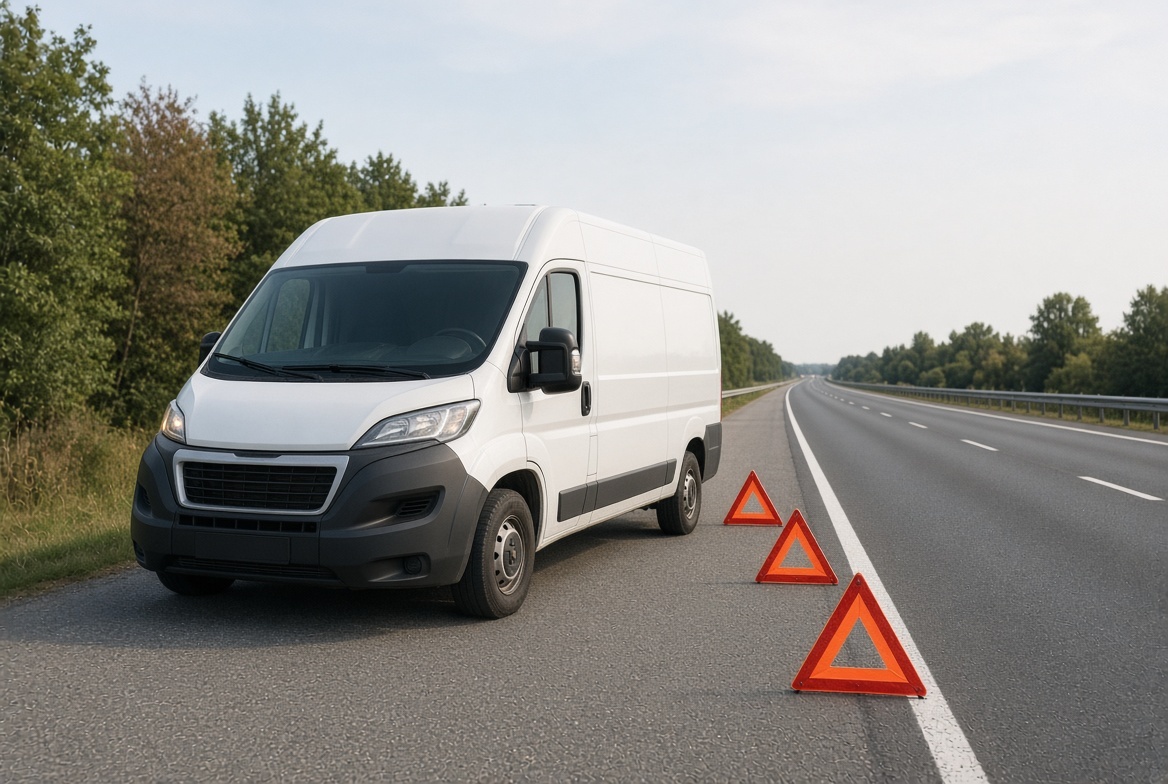




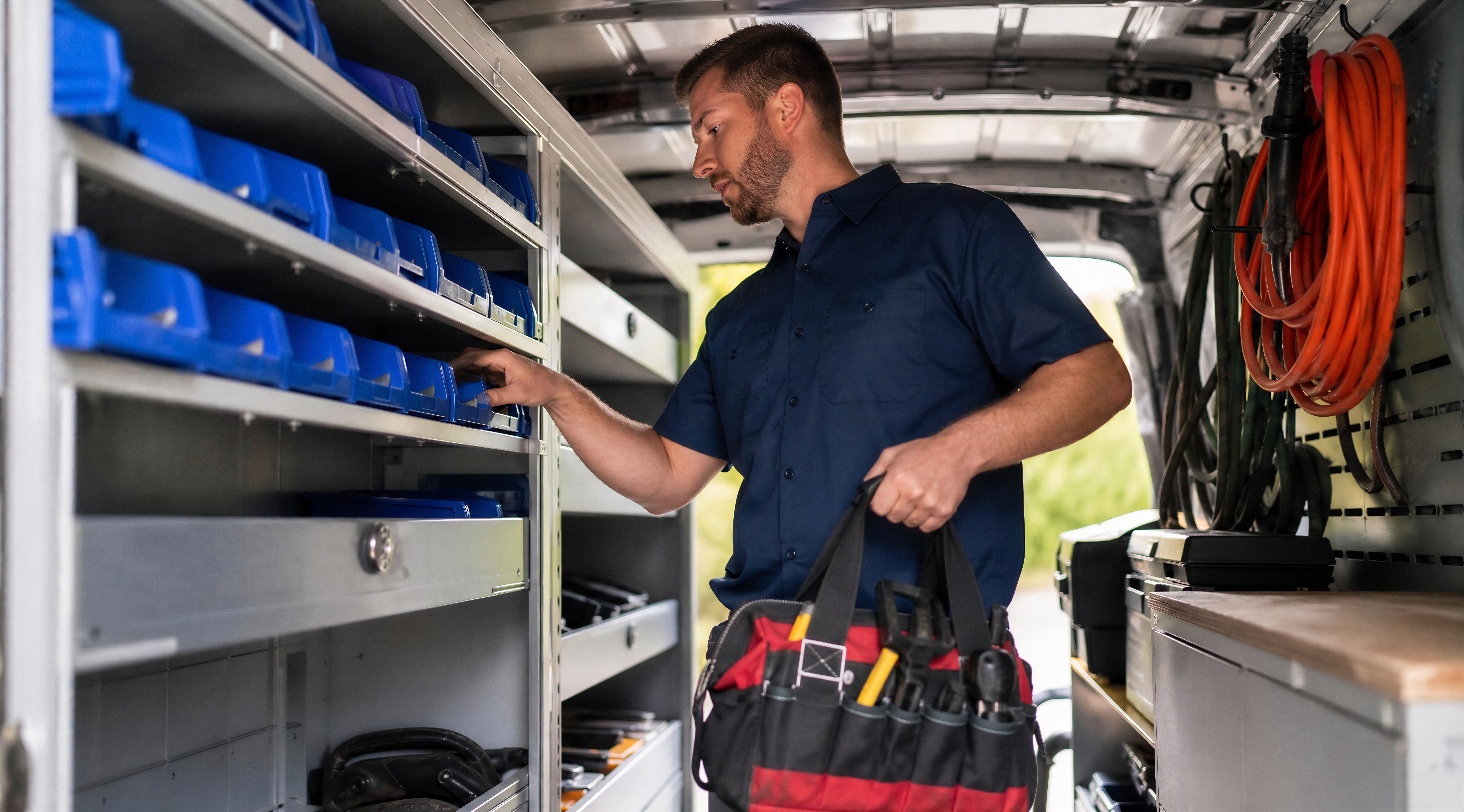
A pickup cap or van partition looks like an add-on. It is really a decision about damage, theft, weather, and how clean the vehicle comes back at the end of the lease.
Neither one pays for itself on day one. Both can pay for themselves the first time they stop a ruined load, a broken window, or a cab full of tools after a hard stop.

Here is how to tell which one is worth the money for a small fleet of vans and pickups.
What Each One Actually Does
Pickup cap
Covers the bed. Keeps tools, parts, and materials dry and out of sight. Adds security and organization. Common 2026 prices run roughly $1,200–$2,200 for a basic aluminum cap and $2,000–$5,500+ for commercial or fiberglass units, before accessories.
Van partition (bulkhead)
Separates the cab from the cargo area. Stops shifting loads from reaching the driver, cuts noise, improves climate control, and hides cargo. Basic units often start under $1,000 installed; solid or door-style partitions cost more.
They solve different problems. A cap protects what rides in a pickup bed. A partition protects the people in the front of a van.
When a Pickup Cap Pays for Itself
A cap is usually worth it when the bed carries valuable or weather-sensitive items most days.
It pays when:
- Tools or parts get wet or damaged in the open bed more than once a year
- You have had (or almost had) a theft from an open bed
- Drivers lose time tarping or rearranging cargo in the rain
- You want modular storage that can move to the next truck
Simple payback test
If a basic cap costs $2,000 and it prevents one $800 tool loss plus a few ruined loads a year, it can pay for itself inside 12–18 months. If the bed mostly hauls bagged materials that already sit fine in the open, a tonneau cover or nothing may be enough.
Choose aluminum for lighter weight and easier service. Choose a heavier commercial cap only if you need side access, shelves, or frequent heavy use. Ask whether the cap can transfer to the next pickup — that spreads the cost across two vehicles.
When a Van Partition Pays for Itself
A partition is less about organization and more about risk.
It pays when:
- Cargo can shift on hard stops (bins, equipment, unsecured loads)
- You want the cab quieter and easier to heat or cool
- Tools in the cargo area are visible from outside and invite theft
- You are preparing for cleaner turn-in and fewer interior damage claims
One load-shift incident can cost more in downtime, injury risk, or insurance than the partition itself. That is the usual payback case.
Solid partitions give the most protection and the quietest cab. Mesh or window styles keep visibility and cost less. Match the style to how drivers actually use the van — a full solid wall with no access can frustrate crews who need to reach cargo without exiting.
Compare the Real Cost, Not Just the Sticker
| Item | Typical range | What moves the number |
|---|---|---|
| Basic aluminum pickup cap | $1,200–$2,200 | Bed length, install, locks |
| Commercial pickup cap | $2,000–$5,500+ | Side doors, shelves, lighting |
| Basic van partition | Under $1,000–$1,500 | Mesh vs solid, install time |
| Solid or door partition | Higher | Material, access door, fit |
Add install, wiring for lights, and any required removal at lease-end. A cheaper unit that cannot transfer or causes turn-in damage isn't cheaper.
Lease and Turn-In Reality
On a leased vehicle, confirm three things before you buy:
- Can you remove the cap or partition cleanly?
- Who owns it at the end — you or the lessor?
- Will mounting holes or brackets create a condition charge?
Modular, bolt-in equipment is usually safer than permanent modifications. Document the install so the turn-in inspection is straightforward.
A Quick Decision Rule
- Pickup hauls tools or parts daily and sits outside → Cap is likely to pay.
- Pickup hauls bulk materials that do not mind weather → Skip or use a simpler cover.
- Van carries unsecured or shifting cargo → Partition is likely to pay.
- Van is mostly empty or lightly loaded → Partition still helps with noise and theft deterrence, but the payback is slower.
Key Takeaways
- A cap protects the bed; a partition protects the cab.
- Payback usually comes from avoided damage, theft, or a single incident—not daily convenience alone.
- Basic aluminum caps often land at $1,200–$2,200; partitions can start under $1,000.
- Prefer equipment that can move to the next vehicle.
- Confirm removal and ownership before you install on a lease.
- Match the option to how the vehicle is actually used, not to a catalog package.
The right add-on stops a problem you already have. The wrong one looks complete and never gets used.
Need help matching caps, partitions, and vehicles to the way your fleet works? Contact Wilmar. We can review how your vans and pickups are used and structure the lease so you plan the equipment from the start.

FAQ: Pickup Caps and Van Partitions
Q: How much does a work pickup cap cost in 2026?
A: Basic aluminum caps commonly run $1,200–$2,200. Commercial or fully equipped caps often land $2,000–$5,500 or more, depending on features and bed length.
Q: Does a van partition lower insurance?
A: It can help with risk, but do not count on an automatic discount. The bigger return is usually fewer load-shift incidents and less visible cargo.
Q: Can I move a cap to the next truck?
A: Many commercial caps can transfer if the bed size matches. Ask about transfer cost and fit before you buy. Spreading the cost across two vehicles improves payback.
Q: Solid or mesh partition — which is better?
A: Solid gives more protection, a quieter cab, and better climate control. Mesh or window styles cost less and keep visibility. Choose based on what you haul and whether drivers need to see into the cargo area.
Q: Will a cap or partition create lease-end charges?
A: Only if mounting damages the vehicle or the equipment is left behind incorrectly. Confirm removal rules and document the install.
Q: Is a cap worth it if we only haul materials occasionally?
A: Probably not. If weather damage or theft is rare, a simpler cover or open bed is usually enough.
Q: Should every van get a partition?
A: If the van regularly carries tools, bins, or anything that can shift, yes. If it stays mostly empty, the benefit is smaller.