


Running a small fleet while growing your business is a balancing act. You have vehicles to maintain, drivers to schedule, fuel costs to track, and compliance paperwork stacking up on your desk. Every hour you spend coordinating repairs or negotiating lease terms is an hour you could spend serving customers or landing new contracts.
That is exactly why more small and mid-sized service businesses are turning to outsourced fleet management and leasing. Handing off vehicle acquisition, maintenance oversight, and lifecycle planning to an experienced partner can free your team to focus on core operations while bringing fleet costs under control.

This guide covers everything you need to know about outsourcing your small fleet, from what services are available and how independent leasing works to the cost drivers you should understand before signing your first agreement.
Key Takeaways: Small Fleet Outsourcing
- Outsourcing fleet management shifts vehicle acquisition, maintenance, and administration to a specialized partner so you can focus on revenue-generating work.
- Independent leasing offers flexible terms, lower upfront costs, and residual-value transparency that large national programs often do not provide to smaller fleets.
- Lifecycle cost optimization, including vehicle selection, replacement timing, and resale strategy, often delivers greater savings than negotiating a lower monthly payment alone.
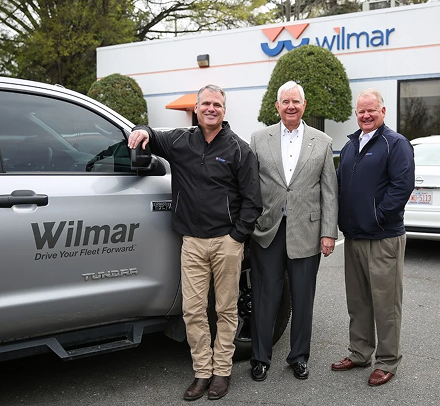
- Wilmar, Inc. builds customized fleet programs for small and growing businesses across the Southeast, covering leasing, maintenance, fuel, and administration through a single point of contact.
- Choosing the right fleet partner requires evaluating independence, regional expertise, service flexibility, and willingness to work with fleets of every size.
What Is Small Fleet Management Outsourcing?
Small fleet management outsourcing means hiring a third-party partner to handle some or all of the operational and administrative tasks involved in running your vehicles. Those tasks typically include vehicle sourcing, lease structuring, preventive maintenance coordination, fuel management, registration and titling, driver support, and end-of-life remarketing.
The scope of outsourcing varies based on what your business needs. Some companies hand off every fleet-related responsibility. Others keep vehicle selection in-house but outsource maintenance coordination and fuel-card administration. A good fleet partner will design a program around your operation rather than forcing you into a predetermined package.
For small fleets, typically ranging from one to fifty vehicles, outsourcing fills an expertise gap. Most growing service businesses do not have a dedicated fleet manager on staff. The owner, controller, or operations director ends up managing vehicles alongside their primary responsibilities, and fleet decisions get made reactively instead of strategically.
Why Growing Service Businesses Outsource Fleet Operations
How Does Outsourcing Save Time for Small Fleet Operators?
Time is one of the most undervalued costs in small fleet management. Coordinating a single vehicle replacement can involve researching models, obtaining quotes, arranging financing, scheduling upfitting, managing registration, and coordinating delivery. Multiply that across even five or ten vehicles, and the administrative burden adds up fast.
An outsourced fleet partner handles this coordination on your behalf. You describe the job the vehicle needs to perform, and the partner manages the rest. That workflow frees your team to focus on serving customers rather than chasing paperwork.
Wilmar, Inc., for example, coordinates vehicle selection, financing, upfitting, and delivery through a single relationship so your team makes one phone call instead of managing four or five vendors.
What Cost Advantages Does Outsourcing Provide?
Outsourcing introduces several cost advantages that are difficult to replicate with an in-house approach. Fleet partners typically have volume purchasing relationships with manufacturers, access to preferred-rate maintenance networks, and the analytical tools to benchmark your costs against similar fleets.
Beyond direct discounts, the bigger savings come from better decision-making. A partner who evaluates total cost of ownership, rather than just sticker price, can steer you toward vehicles that cost less over their full lifecycle. That means lower maintenance expenses, better fuel efficiency, and stronger resale values when the vehicle leaves your fleet.
When Does Outsourcing Make Sense for a Growing Business?
Outsourcing tends to pay for itself when any of these conditions apply: your fleet is growing and vehicle decisions are becoming more frequent, maintenance issues are causing unplanned downtime, your team is spending significant hours on fleet paperwork, or your current approach to vehicle replacement is reactive rather than planned.
If you find yourself Googling repair shops during a breakdown or scrambling to replace a vehicle that should have been cycled out months ago, an outsourced partner can bring structure and proactive planning to your operation. The goal is to turn fleet management from a distraction into a system that runs in the background.
Understanding Independent Vehicle Leasing for Small Fleets
What Is Independent Vehicle Leasing?
Independent vehicle leasing means working with a leasing provider that is not tied to a single manufacturer or a large national financial institution. Independent providers structure leases based on how your specific vehicles will be used, rather than applying a standard formula across every account.
This distinction matters because small fleets rarely fit the mold of a large national program. Your cargo vans might run different routes, carry different payloads, and accumulate different mileage than the vehicles in a 500-unit corporate fleet. Independent leasing accounts for those differences when setting lease terms, mileage allowances, and residual values.
How Does Lease Structure Affect Your Cash Flow?
Leasing preserves working capital by eliminating the large upfront investment required to purchase vehicles outright. You spread the cost across predictable monthly payments that align with the revenue your fleet generates. A Corporate Fleet Services report notes that leasing converts a lumpy, asset-heavy expense into a manageable operating cost with measurable impact on liquidity.
The lease structure, including the term length, mileage allowance, and residual value, directly affects your monthly payment and total cost over the life of the agreement. A shorter term means higher monthly payments but a fresher fleet. A longer term lowers monthly costs but may increase maintenance expenses as vehicles age.
Working with an experienced leasing partner helps you find the balance that supports your cash flow goals without sacrificing fleet reliability.
Core Services Included in Outsourced Fleet Management
Vehicle Selection and Acquisition
Choosing the right vehicle involves more than comparing sticker prices. A fleet partner evaluates each vehicle based on the work it will perform, projected mileage, payload and towing requirements, fuel efficiency, expected maintenance costs, and projected resale value. That analysis identifies the vehicle with the lowest total cost of ownership for the job, which is not always the one with the lowest purchase price.
Independent partners also provide access to manufacturer fleet incentives and volume-based programs that smaller businesses may not qualify for on their own.
Maintenance and Repair Coordination
Outsourced maintenance programs give your drivers access to a nationwide network of service shops without requiring you to negotiate rates or manage repair authorizations yourself. Preventive maintenance is scheduled proactively, reducing the likelihood of costly breakdowns and extending vehicle life.
Many fleet partners employ certified representatives who review repair recommendations before authorizing work. This oversight helps prevent unnecessary repairs and keeps your maintenance spending in line with benchmarks for your vehicle type and usage pattern. According to a FleetOwner analysis, full-service leasing with bundled maintenance is becoming the default approach for businesses that need predictable operating costs.
Fuel Management and Cost Controls
Fuel is one of the largest variable expenses in any fleet. Outsourced fuel programs typically include fuel cards with per-driver spending limits, monthly reporting, and exception monitoring that flags unusual purchases before they become a budget problem.
The visibility these programs provide can be valuable for small fleets. Instead of reviewing individual receipts or gas station statements, you get a consolidated view of fuel spending by driver, vehicle, and location. That kind of data helps you make informed decisions about routes, driver habits, and fuel sourcing.
Administration, Titling, and Compliance
Vehicle registration renewals, license plate transfers, toll-tag management, and regulatory compliance create a steady stream of administrative tasks. Missing a renewal or letting a registration lapse can result in fines or vehicles sitting idle. Outsourcing this work to a fleet partner removes it from your team's to-do list and ensures nothing falls through the cracks.
Replacement Planning and Remarketing
Knowing when to replace a vehicle is one of the most impactful decisions in fleet lifecycle management. Replace too early, and you absorb unnecessary depreciation. Replace too late and rising maintenance costs and increased downtime eat into your margins.
A fleet partner tracks each vehicle's operating costs, condition, and market value to identify the optimal replacement point. When it is time to cycle a vehicle out, the partner manages remarketing, including preparation, auction placement, and sale, to maximize the return you receive.
How to Evaluate Fleet Operating Cost Reduction Opportunities
What Are the Largest Cost Drivers in a Small Fleet?
The largest cost drivers for a small fleet typically fall into five categories: depreciation, fuel, maintenance and repairs, insurance, and administration. Depreciation alone can account for the single largest portion of total cost of ownership, which is why vehicle selection and replacement timing are so critical.
Fuel costs are influenced by vehicle type, driver behavior, route efficiency, and fuel purchasing practices. Maintenance costs rise as vehicles age, and unplanned repairs are significantly more expensive than preventive work. Administrative costs, while often invisible, include the labor hours your team spends coordinating fleet tasks instead of revenue-producing work.
How Does Total Cost of Ownership Differ from Monthly Payment?
Monthly payment is one component of total cost of ownership, but it does not tell the full story. Total cost of ownership includes the purchase or lease cost, financing charges, fuel, maintenance and repairs, insurance, registration and compliance, downtime, and the net proceeds from selling or returning the vehicle at end of life.
Two vehicles with identical monthly lease payments can have dramatically different total costs of ownership if one requires more frequent repairs, consumes more fuel, or depreciates faster. Evaluating total cost of ownership gives you a complete picture of what each vehicle actually costs your business to operate.
Where Do Small Fleets Lose Money Without Realizing It?
The most common hidden costs in small fleet management include keeping vehicles past their optimal replacement point, choosing vehicles based on purchase price rather than lifecycle cost, missing manufacturer incentive programs, paying retail maintenance rates instead of negotiated fleet rates, and absorbing preventable fuel waste from idling or inefficient routing.
An outsourced fleet partner brings visibility to these areas and helps you quantify the improvement opportunities. Even modest improvements in vehicle selection, maintenance timing, and fuel management can compound into meaningful savings across a fleet of ten or twenty vehicles.
How to Choose the Right Fleet Partner for Your Business
What Should You Look for in a Fleet Management Provider?
Start by evaluating whether the provider is independent. An independent partner isn't tied to a specific manufacturer or financial institution, so their vehicle recommendations are based on your needs, not on moving a particular brand's inventory. Independence also extends to maintenance networks, lease structures, and remarketing strategies.
Beyond independence, look for a partner who has demonstrated experience with fleets your size. National providers built for enterprise accounts often lack the flexibility or attention that small fleet operators need. A provider who works with small and growing fleets every day will understand the constraints you face and build a program that fits.
Why Does Regional Expertise Matter for Small Fleets?
Regional expertise matters because local conditions shape fleet operations. Weather, traffic patterns, labor market dynamics, and regulatory requirements all vary by geography. A provider with deep regional knowledge can offer more accurate vehicle recommendations, better maintenance scheduling, and stronger resale predictions.
In the Southeast, for instance, heat and humidity place additional stress on engines, transmissions, and HVAC systems. A provider based in the region understands those conditions and factors them into maintenance scheduling and vehicle specification decisions. That kind of local knowledge is difficult to replicate from a centralized national office.
Questions to Ask Before Signing With a Fleet Partner
Before committing to a fleet management provider, ask these questions:
- How do you determine vehicle recommendations? Is it based on total cost of ownership or purchase price alone?
- What lease structures do you offer, and can you customize terms for each vehicle?
- How do you handle maintenance coordination, and what oversight do you provide on repair authorizations?
- Will I have a dedicated point of contact, or will I work with a call center?
- How do you approach replacement timing and vehicle remarketing?
- Can I start with a few services and add more as my fleet grows?
The answers will reveal whether the provider is structured to serve your fleet as a true partner or simply process your vehicles through a standardized system.
Step-by-Step: How to Start Outsourcing Your Small Fleet
Step 1: Assess Your Current Fleet Operations
Begin by documenting what you currently manage in-house: vehicle types, ages, mileage, maintenance history, fuel spending, insurance, and any recurring administrative pain points. This baseline gives you and a prospective partner a clear picture of where you stand and where you can improve.
Step 2: Identify Your Biggest Pain Points
Prioritize the issues that take the most time or cost the most. Common pain points for small fleets include unplanned downtime, limited maintenance visibility, difficulty managing multiple vendors, and vehicles kept past their economical service life.
Step 3: Request a Fleet Analysis
A reputable fleet partner will offer a complimentary fleet analysis before asking you to commit. Wilmar, Inc. provides a free fleet consultation that reviews your current setup, compares options, and designs a customized strategy with no pressure and no obligation.
Step 4: Define the Scope of Services
You do not have to outsource everything at once. Many small businesses start by outsourcing maintenance coordination and fuel management, then add vehicle acquisition and lifecycle planning as they grow. A good partner will scale the program alongside your business.
Step 5: Establish Reporting and Communication
Agree on the reporting cadence and key metrics you want to track. Useful fleet metrics include cost per mile, maintenance cost per vehicle, fuel cost per vehicle, vehicle utilization rate, and average days out of service. Regular reporting keeps you informed and ensures the partnership delivers measurable results.
Step 6: Transition Vehicles Into the Program
Work with your partner to transition existing vehicles into the management program and establish a replacement schedule for aging units. The transition should be phased to avoid disruption. Most partners handle registration transfers, maintenance account setup, and fuel-card enrollment as part of onboarding.
Common Misconceptions About Outsourcing Fleet Management
Is Outsourcing Only for Large Fleets?
This is one of the most persistent myths in fleet management. Outsourcing is available and frequently beneficial for fleets of every size. Providers like Wilmar, Inc. offer programs specifically designed for small and emerging businesses, including their Micro Fleet program for operations with as few as one to five vehicles. You do not need hundreds of vehicles to benefit from professional fleet support.
Does Outsourcing Mean Losing Control of Your Fleet?
A well-structured outsourcing relationship actually increases your control by providing data, visibility, and expert guidance you would not otherwise have. You retain decision-making authority over vehicle selection, replacement timing, and budget priorities. The partner handles the operational execution and provides recommendations, but your team makes the final decisions.
Will Outsourcing Lock Me Into a Rigid Contract?
Independent providers typically offer more flexible arrangements than national programs. Lease terms, service scope, and program structure can often be adjusted as your business needs change. Before signing any agreement, clarify the terms around early termination, fleet size changes, and service modifications.
In Conclusion: How to Make Small Fleet Outsourcing Work for Your Business
Outsourcing your small fleet is not about handing over the keys and hoping for the results you want. It is about building a partnership with a provider who understands your operation, brings expertise you may not have in-house, and delivers measurable improvements in cost, uptime, and administrative efficiency.
The right time to explore outsourcing is before fleet problems become emergencies. Start with a fleet analysis to understand your current costs and identify opportunities. Define the services that address your most pressing needs. Choose a partner who will build a program around your business rather than fitting you into a template.
For growing service businesses across the Southeast, Wilmar, Inc. offers independent advice, customized leasing, and hands-on fleet management support that small fleet operators need. Reach out for a free fleet consultation and take the first step toward a fleet that works harder for your business.
FAQs About Small Fleet Outsourcing
What Is the Minimum Fleet Size for Outsourced Management?
There is no universal minimum. Many providers work with fleets as small as one to five vehicles. Wilmar, Inc. offers its Micro Fleet program specifically for small and emerging businesses, providing professional fleet support without requiring a large vehicle count to get started.
How Much Does Outsourced Fleet Management Cost?
Costs vary based on fleet size, included services, and the complexity of your operation. Most programs charge a per-vehicle management fee that covers coordination, reporting, and ongoing advisory support. The management fee is typically offset by savings in maintenance, fuel, vehicle selection, and administrative time.
Can I Outsource Fleet Management for Vehicles I Already Own?
Yes. Many fleet management providers can overlay their maintenance, fuel, and administrative services onto vehicles you already own. Wilmar, Inc. can review your owned vehicles and confirm which management services are available for your existing fleet.
What Is the Difference Between Fleet Leasing and Fleet Management?
Fleet leasing covers the financing and acquisition of vehicles. Fleet management covers the ongoing operational support, including maintenance coordination, fuel programs, compliance, reporting, and replacement planning. Many providers, including Wilmar, Inc., offer both services together, so you get a single partner for the complete vehicle lifecycle.
How Long Does It Take to Transition to an Outsourced Fleet Program?
The transition timeline depends on your fleet size and the scope of services. Most small fleets can be onboarded within a few weeks. The process typically involves a fleet review, service setup, registration transfers, fuel-card enrollment, and driver communication. Your fleet partner handles coordination to minimize disruption.
Does Outsourcing Fleet Management Reduce Vehicle Downtime?
Proactive maintenance scheduling and access to a broad service network can reduce unplanned downtime. When your provider monitors vehicle condition and coordinates repairs before a breakdown occurs, your vehicles spend more time on the road and less time in the shop. Wilmar, Inc. provides access to more than 70,000 service locations nationwide and employs certified representatives who review repair recommendations.